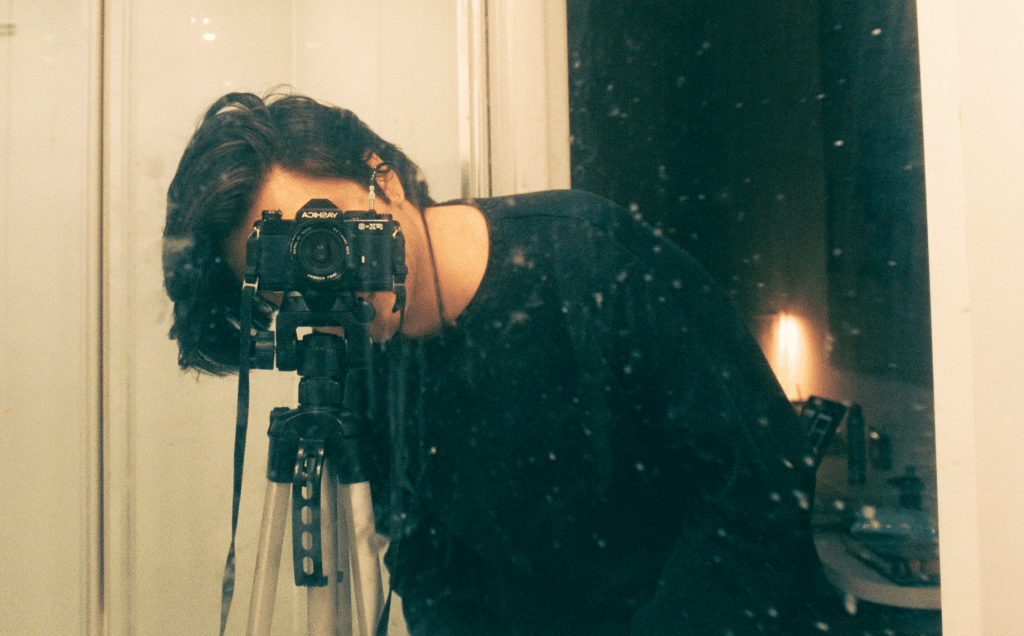
Ali Lalfam is a photographer, visual artist and film curator whose practice moves between image-making, cultural programming and writing. Across these forms, his work explores identity, migration, desire, vulnerability and the unstable relationship between the body, memory and the self.
In his photographic practice, Lalfam works primarily through staged self-portraiture, using domestic spaces, movement, long exposure and performance to translate psychological states into visual form. Bodies are fragmented, obscured, doubled or gradually dissolved, while empty rooms and personal objects become traces of presence. Drawing on lived experience, he approaches photography as both an autobiographical practice and a method of self-examination, combining intimacy with theatricality and exploring tensions between masculinity and vulnerability, control and submission, belonging and displacement. Rather than treating identity as stable or coherent, his work considers it as something continually performed, questioned and reconstructed through the camera.
Alongside his visual practice, Lalfam develops independent film-curation, cultural programming, digital and writing projects. His curatorial work is concerned with the relationship between cinema, history, politics, memory and cultural displacement, often bringing overlooked films and visual traditions into new public conversations. He has contributed to projects with organisations including the BFI, the ICA and the Freud Museum London, working across programming, audience development, communications and cultural storytelling.
